Sex-specific lipidomic profiling of the marine mussel Mytilus coruscus: A comparative analysis of male and female lipid metabolism
Food Chemistry, 2026
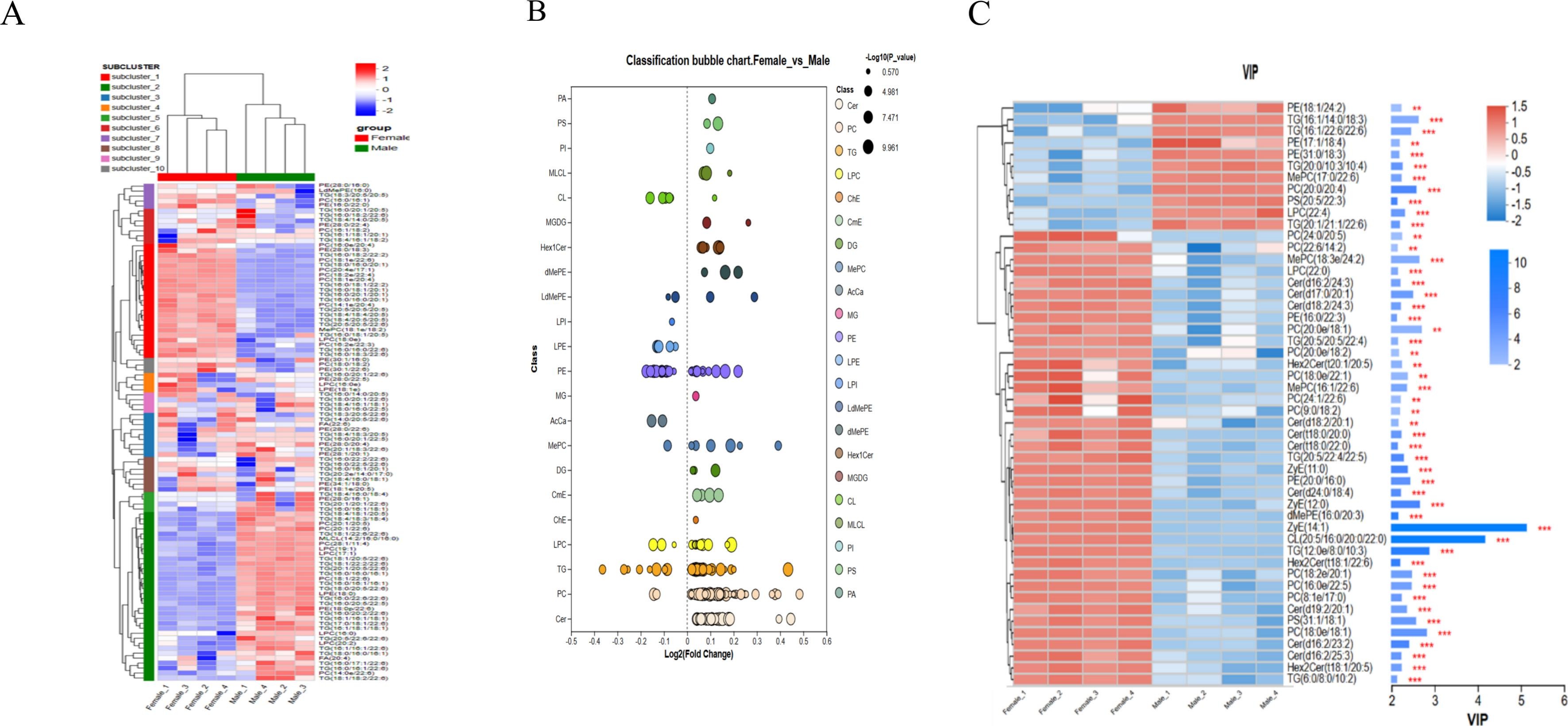
This study investigated sex-specific lipid metabolic differences in thick-shell mussels (Mytilus coruscus) using UPLC-HRMS-based lipidomics. Female mussels exhibited higher levels of glycerophospholipids, particularly phosphatidylcholine (PC) and phosphatidylethanolamine (PE), along with greater enrichment of polyunsaturated fatty acids (PUFAs), whereas males showed higher proportions of glycerolipids and saturated fatty acids (SFAs). Multivariate analysis revealed clear separation between male and female lipidomic profiles. A total of 140 differential lipid species were identified, including 80 triacylglycerols (TGs), 26 PCs, 13 diacylglycerols (DGs), and 10 PEs, highlighting extensive sex-dependent lipid remodeling. Notably, female mussels exhibited greater enrichment of structural phospholipids and ceramide species, suggesting enhanced membrane remodeling and sphingolipid-associated regulation, while males displayed lipid profiles more closely associated with neutral lipid storage. KEGG pathway analysis identified glycerophospholipid metabolism as the most significantly enriched pathway, alongside glycerolipid metabolism and PUFA-related pathways. These findings suggest distinct lipid metabolic strategies between sexes, potentially reflecting differences in reproductive demands, membrane homeostasis, and energy allocation. Overall, this study provides molecular-level insights into sex-dependent lipid metabolism and supports improved nutritional evaluation and targeted utilization of mussel resources.